
Research highlights the benefits of collaborating with intermediary organizations for local reentry organizations and the justice-involved youth they serve. Read this resource for more information.
Topic: Justice/Reentry
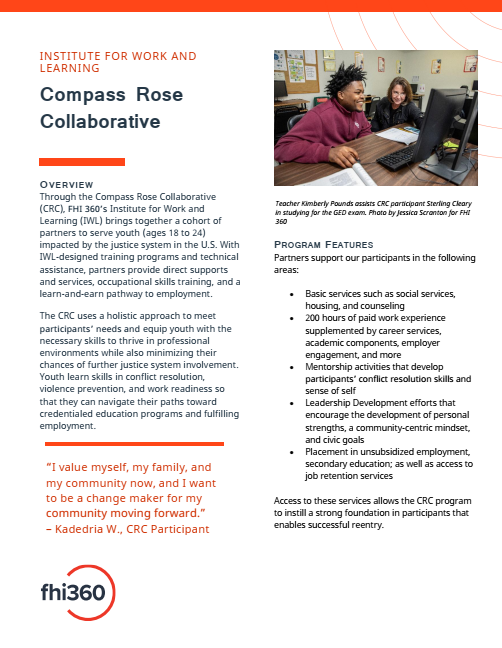
The Compass Rose Collaborative (CRC) brings together FHI 360 and a cohort of partners that will serve justice-impacted youth in a holistic way. Through IWL-designed training materials, a learn-and-earn working environment, and valuable mentorship activities, the CRC ensures that participants are equipped to thrive in their careers while minimizing further justice system involvement. Read this fact sheet to learn more.
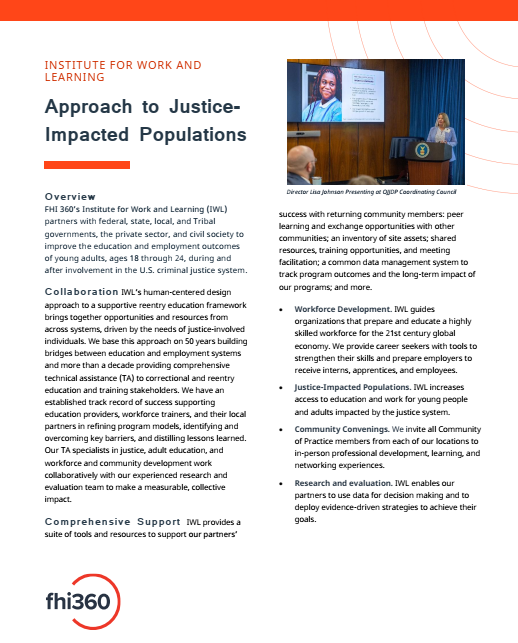
FHI 360’s Institute for Work and Learning partners with federal, state, local, and Tribal governments, the private sector, and civil society to improve the education and employment outcomes of young adults, ages 18 through 24, during and after involvement in the U.S. criminal justice system. Read this overview of our comprehensive services.
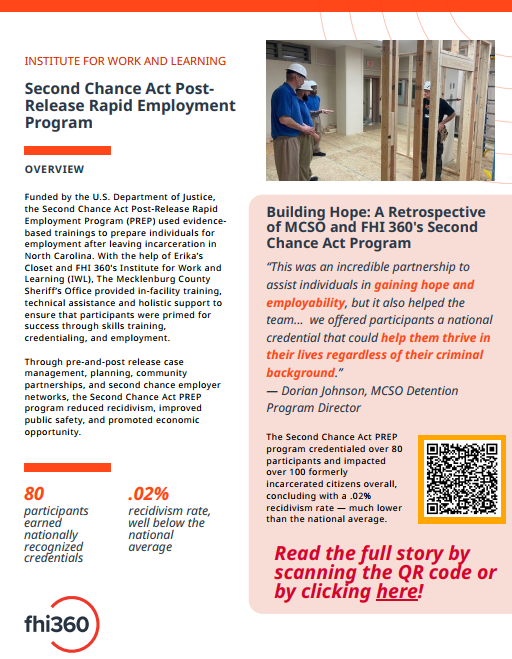
Funded by the U.S. Department of Justice, the Second Chance Act Post-Release Rapid Employment Program (PREP) used evidence-based trainings to prepare individuals for employment after leaving incarceration in North Carolina through a partnership between FHI 360’s Institute for Work and Learning, Erika’s Closet, and the Mecklenburg County Sheriff’s Office.
Read the full fact sheet to learn more!
Substance Abuse Prevention Programming examines the inclusion of Indigenous knowledge, culture, and traditions in health interventions for Native youth. Culture-centric programs promote holistic healing, connection to community, and beneficial, lasting change.
Read the full report to learn more.
Art as Medicine: Art-Based Programming examines the benefits of art as an avenue for emotional expression and healing for justice-involved youth. Art-based programs can help youth process emotions, manage behavioral issues, and develop healthier responses to stress, in addition to building their interpersonal, problem-solving, and emotional regulation skills.
Read the full report to learn more.
Mentoring and peer programs rooted in cultural values are proving to be powerful tools for supporting American Indian and Alaska Native youth. These initiatives, ranging from drumming-based mentoring and equine therapy to youth-led courts and peer recovery support, build on trusted relationships and shared lived experience to foster resilience, reduce justice involvement, and promote mental wellness. This issue brief highlights promising, community-driven approaches that center Native voices and traditions, offering professionals practical insights into culturally responsive, strengths-based strategies that work.
Read the full report to learn more.
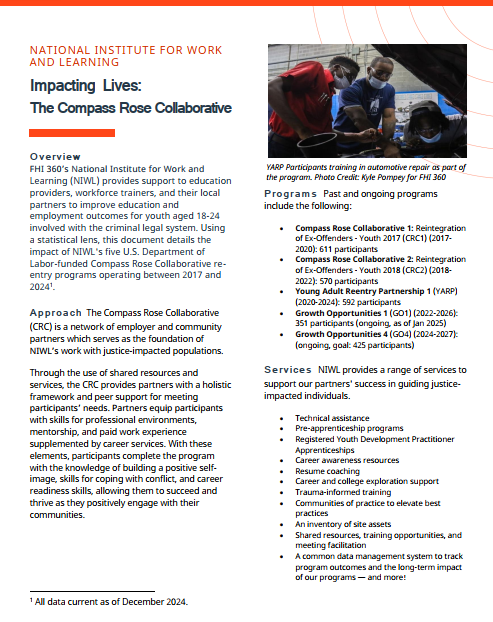
FHI 360’s Institute for Work and Learning (IWL) provides support to education providers, workforce trainers, and their local partners to improve education and employment outcomes for youth aged 18-24 involved with the criminal legal system. Using a statistical lens, this document details the impact of IWL’s five U.S. Department of Labor-funded Compass Rose Collaborative re-entry programs operating between 2017 and 2024.
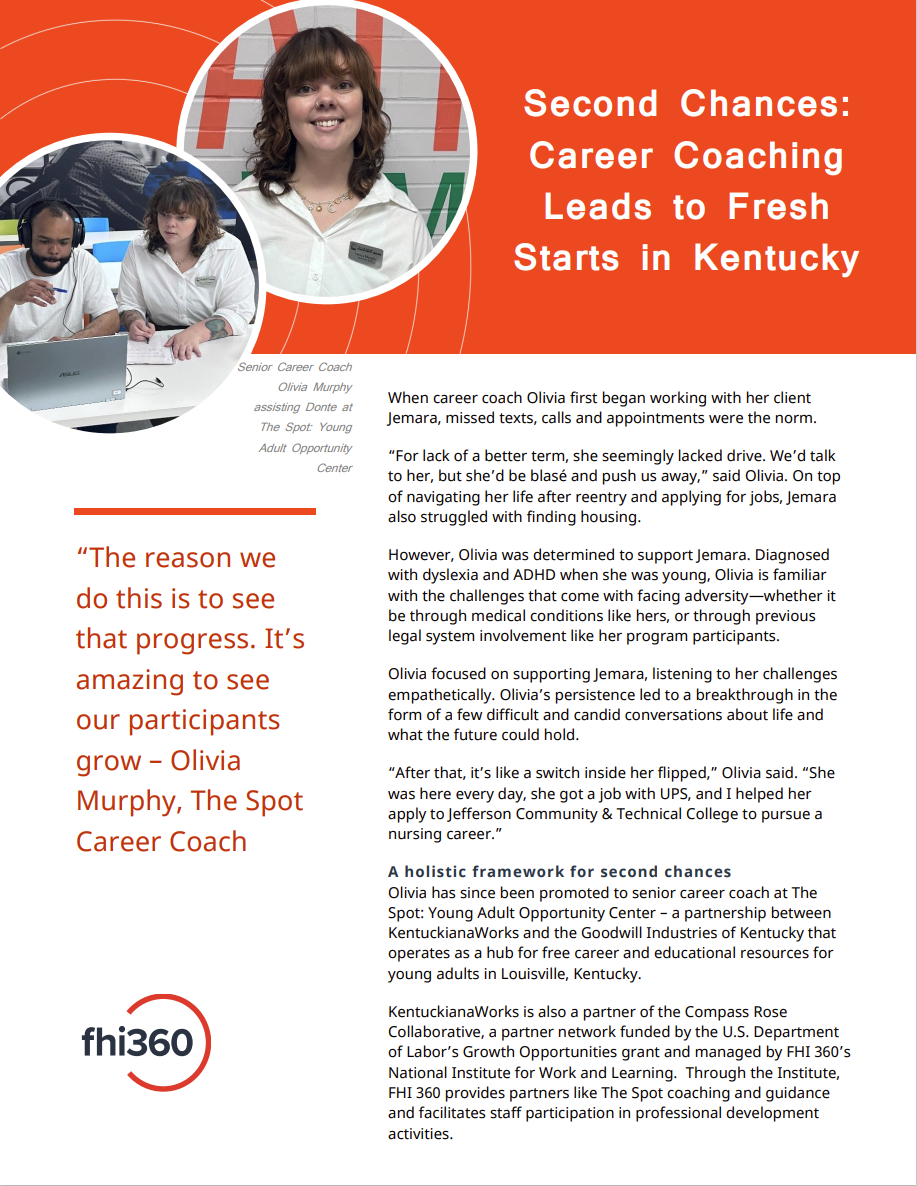
For Second Chance month, we spoke to Olivia Murphy, who serves as senior career coach (and now youth program manager) for The Spot: Young Adult Opportunity Center in Louisville, KY. The story highlights how KentuckianaWorks navigates the challenges of life after incarceration, and how their impact encourages people to embrace second chances.
Read the full story to learn more.
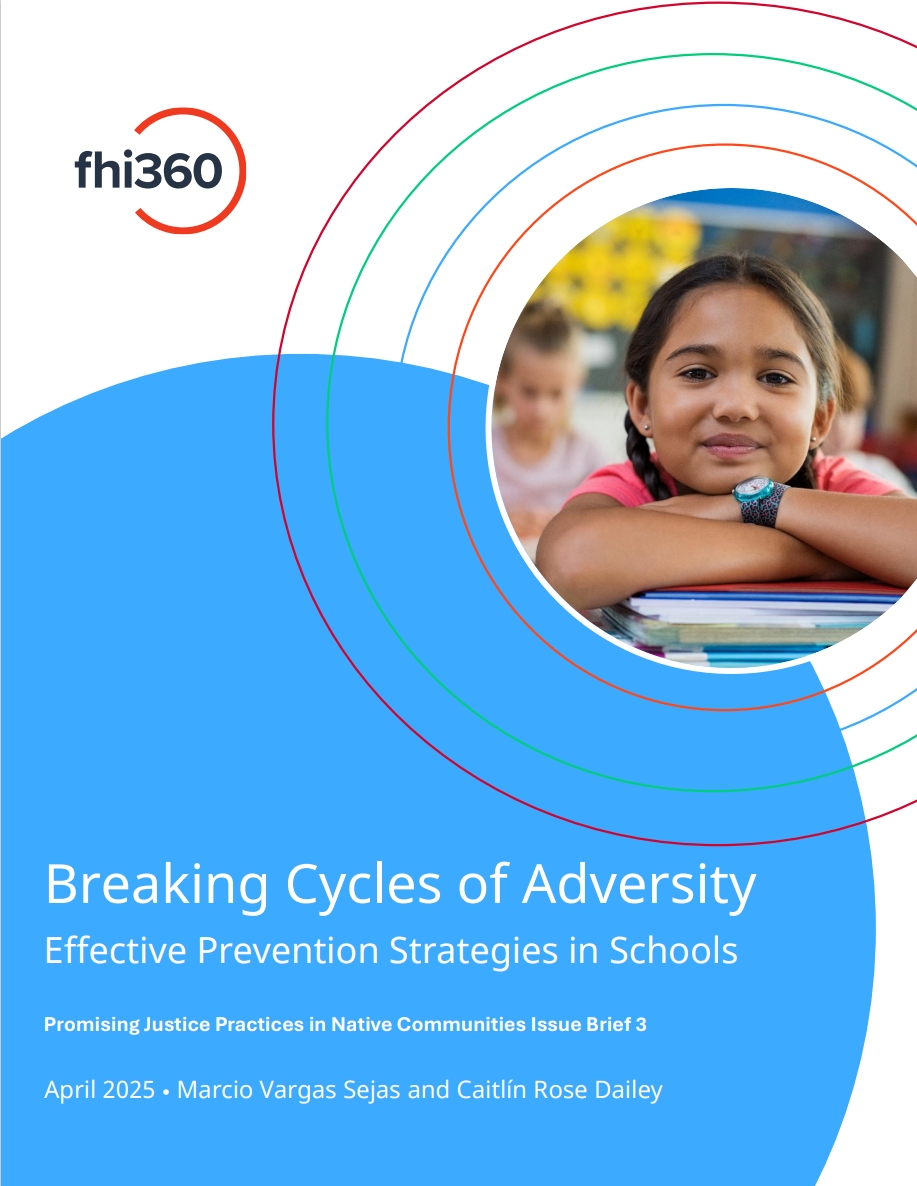
Breaking Cycles of Adversity explores how school-based prevention strategies foster educational success, strengthen social connections, and reduce interactions with the justice system. Culturally relevant approaches that promote positive decision-making can support healthy relationships, strengthen identity, and improve mental and physical health, which are critical protective factors against justice system involvement.
Read the full report to learn more.