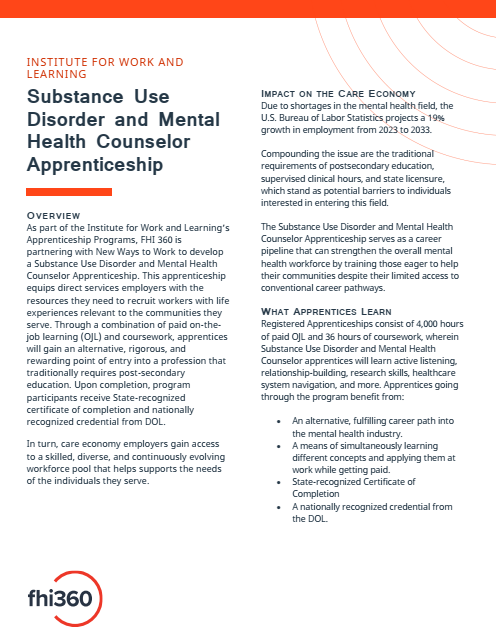
Substance Use Disorder and Mental Health Counselor Apprenticeship

As part of our Apprenticeship Programs, FHI 360 is partnering with New Ways to Work to develop a Substance Use Disorder and Mental Health Counselor Apprenticeship. This apprenticeship equips direct services employers with the resources they need to recruit workers with life experiences relevant to the communities they serve.

Through a combination of paid on-the-job learning (OJL) and coursework, apprentices will gain an alternative, rigorous, and rewarding point of entry into a profession that traditionally requires post-secondary education. Upon completion, program participants receive a national credential from the U.S. Department of Labor. To learn more, read our fact sheet.
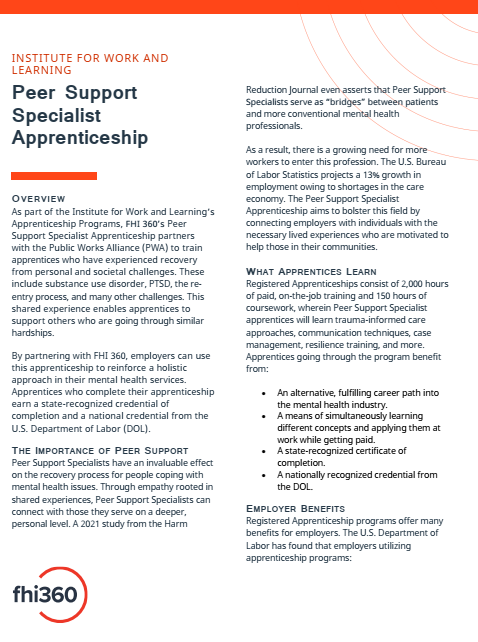
Peer Support Specialist Apprenticeship

As part of our Apprenticeship Programs, FHI 360’s Peer Support Specialist Apprenticeship partners with the Public Works Alliance (PWA) to train apprentices who have experienced recovery from personal and societal challenges. These include substance use disorder, PTSD, the re-entry process, and many other challenges. This shared experience enables apprentices to support others who are going through similar hardships.

By partnering with FHI 360, employers can use this apprenticeship to reinforce a holistic approach in their mental health services. Apprentices who complete their apprenticeship earn a national credential from the U.S. Department of Labor (DOL). To learn more, consult our fact sheet.

Learning and Workforce Development Overview

IWL’s programs serve youth and young adults in career exploration, workforce development, and education to career transitions – all to serve the greater workforce environment in a way that benefits workers, learners, and employers. Read the full overview to learn more.

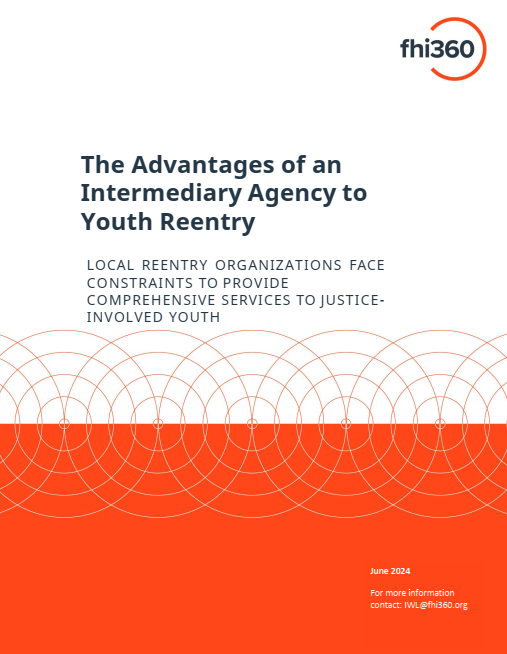
The Advantages of an Intermediary Agency to Youth Reentry

Research highlights the benefits of collaborating with intermediary organizations for local reentry organizations and the justice-involved youth they serve. Read this resource for more information.

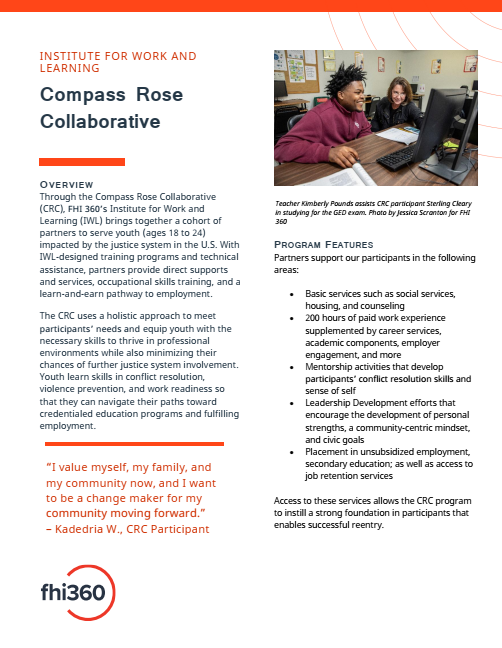
Compass Rose Collaborative Fact Sheet

The Compass Rose Collaborative (CRC) brings together FHI 360 and a cohort of partners that will serve justice-impacted youth in a holistic way. Through IWL-designed training materials, a learn-and-earn working environment, and valuable mentorship activities, the CRC ensures that participants are equipped to thrive in their careers while minimizing further justice system involvement. Read this fact sheet to learn more.

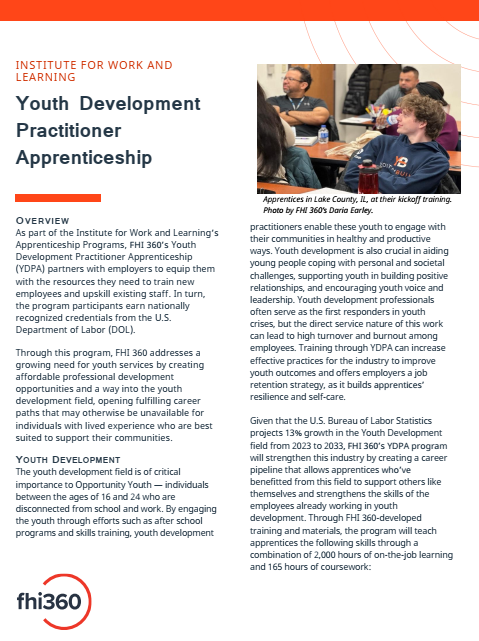
Youth Development Practitioner Apprenticeship

As part of IWL’s Apprenticeship Programs, the Youth Development Practitioner Apprenticeship trains apprentices in youth-supporting fields through 2,000 hours of on-the-job learning and 165 hours of coursework where they learn skills such as positive youth development, coaching, career case management and more. Upon completing the program, apprentices receive a nationally recognized credential from the U.S. Department of Labor. To learn more, read this fact sheet.

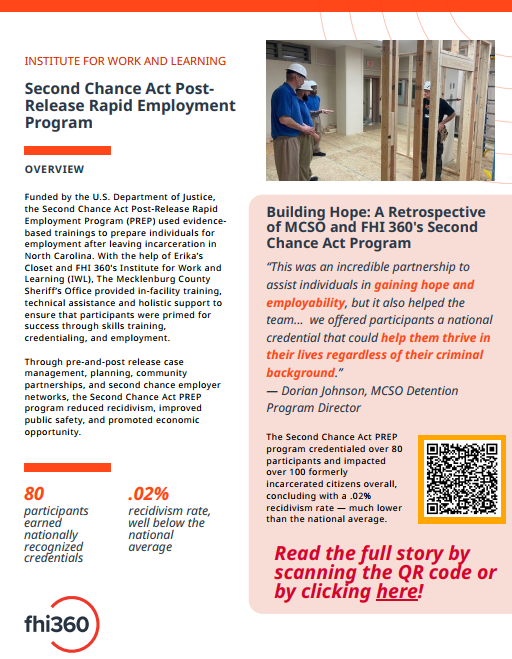
Second Chance Act Post-Release Rapid Employment Program

Funded by the U.S. Department of Justice, the Second Chance Act Post-Release Rapid Employment Program (PREP) used evidence-based trainings to prepare individuals for employment after leaving incarceration in North Carolina through a partnership between FHI 360’s Institute for Work and Learning, Erika’s Closet, and the Mecklenburg County Sheriff’s Office.

Read the full fact sheet to learn more!

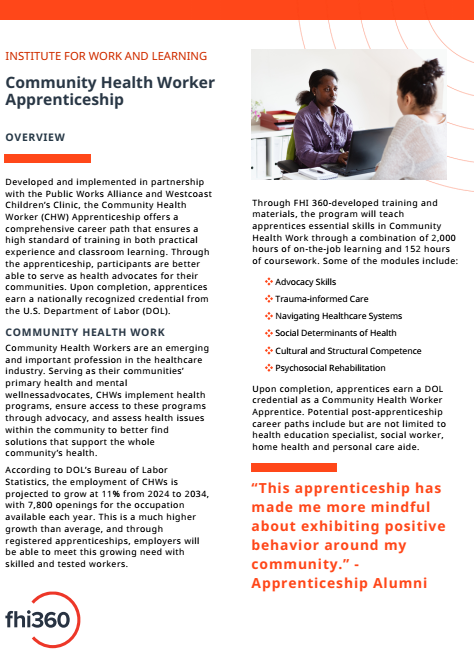
Community Health Worker Apprenticeship

Developed and implemented in partnership with the Public Works Alliance and Westcoast Children’s Clinic, the Community Health Worker (CHW) Apprenticeship offers a comprehensive career path that ensures a high standard of training in both practical experience and classroom learning. Through the apprenticeship, participants are better able to serve as health advocates for their communities. 

Read the full fact sheet to learn more!

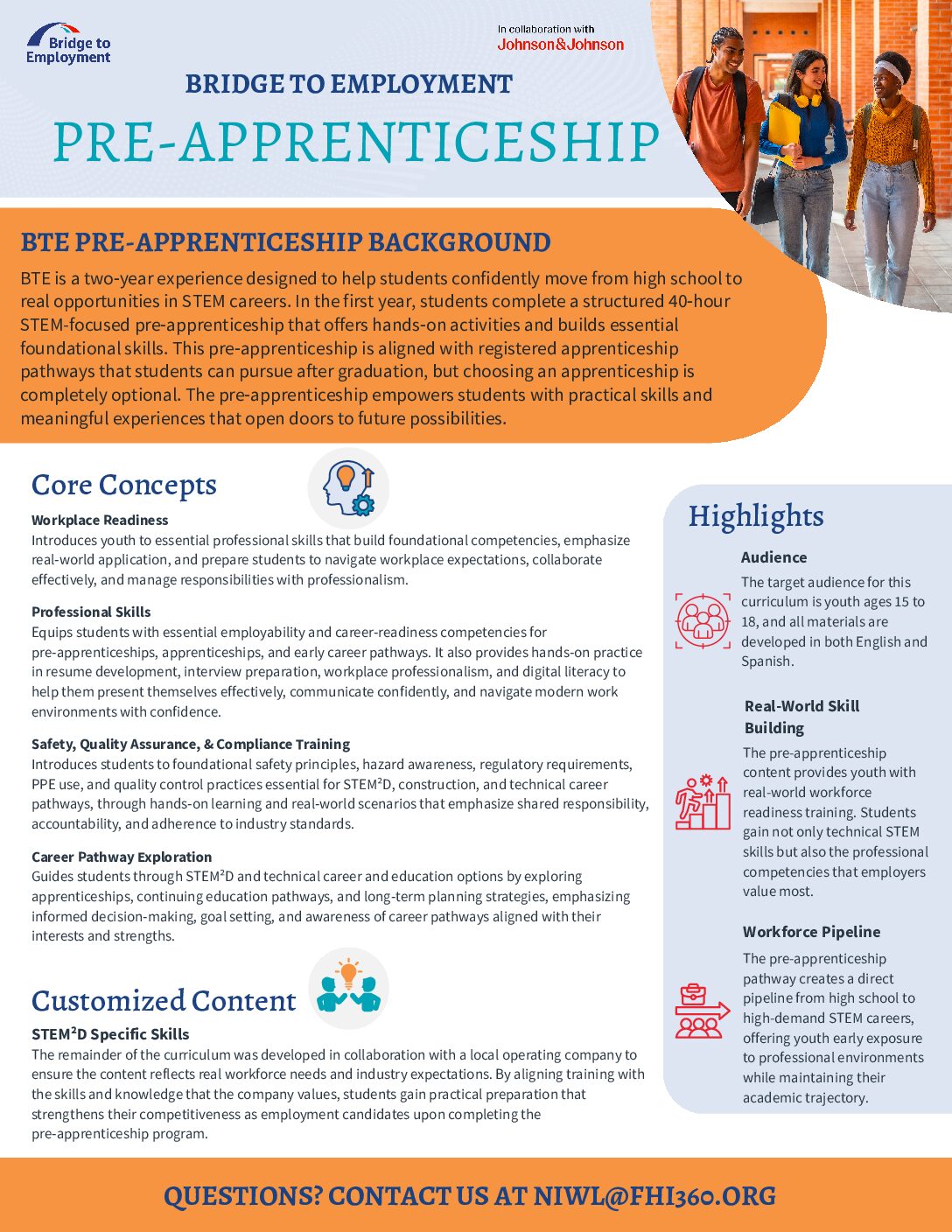
Bridge to Employment Pre-Apprenticeship Flyer

BTE is a two‑year experience designed to help students confidently move from high school to real opportunities in STEM careers. In the first year, students complete a structured 40‑hour STEM-focused pre‑apprenticeship that offers hands‑on activities and builds essential
foundational skills. This pre‑apprenticeship is aligned with registered apprenticeship pathways that students can pursue after graduation, but choosing an apprenticeship is completely optional. The pre‑apprenticeship empowers students with practical skills and meaningful experiences that open doors to future possibilities.

Want to learn more? Read the full flyer by clicking the thumbnail!

Employer Engagement Toolkit

Coming Soon!

Building and maintaining strong employer partnerships is essential for organizations seeking to match talented job seekers with the right opportunities. Employers are not just looking for job candidates; they are seeking long-term, strategic partners who can provide ongoing workforce solutions that align with their business goals. This toolkit is designed to equip workforce development staff with the strategies and insights needed to engage effectively with employers, from the initial prospecting stages to sustaining long-term relationships. Key areas explored:

  • Leveraging LMI for Employer Partnerships
  • Prospecting and Researching Potential Employer Partners
  • Crafting a Communication Strategy
  • Nurturing and Growing Employer Partnerships
  • Employer Incentives and Business Benefits
  • Deepening Employer Relationships and Addressing Challenges
  • Ongoing Partnership and Employer Success