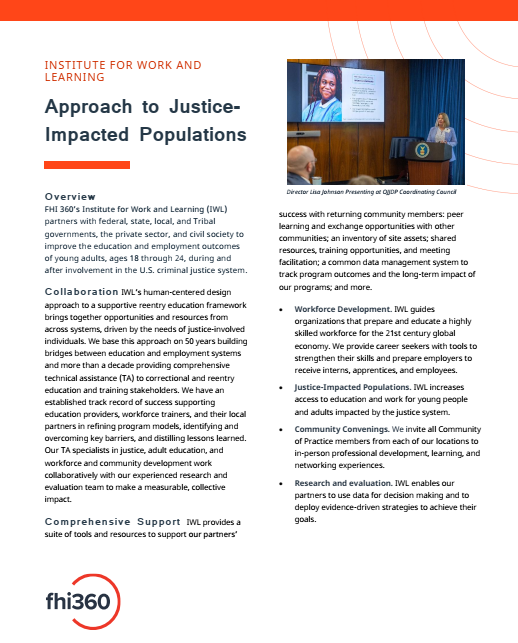
FHI 360’s Institute for Work and Learning partners with federal, state, local, and Tribal governments, the private sector, and civil society to improve the education and employment outcomes of young adults, ages 18 through 24, during and after involvement in the U.S. criminal justice system. Read this overview of our comprehensive services.
Audience: Policy Leaders
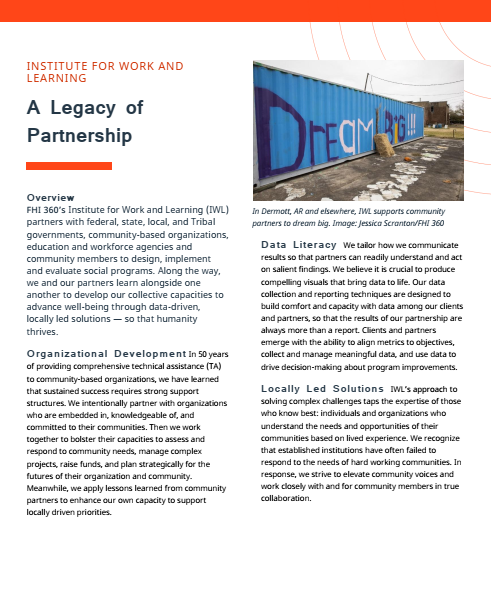
FHI 360’s Institute for Work and Learning (IWL) partners with federal, state, local, and Tribal governments, community-based organizations, education and workforce agencies and community members to design, implement and evaluate social programs. Along the way, we and our partners learn alongside one another to develop our collective capacities to advance well-being through data-driven, locally led solutions — so that humanity thrives.
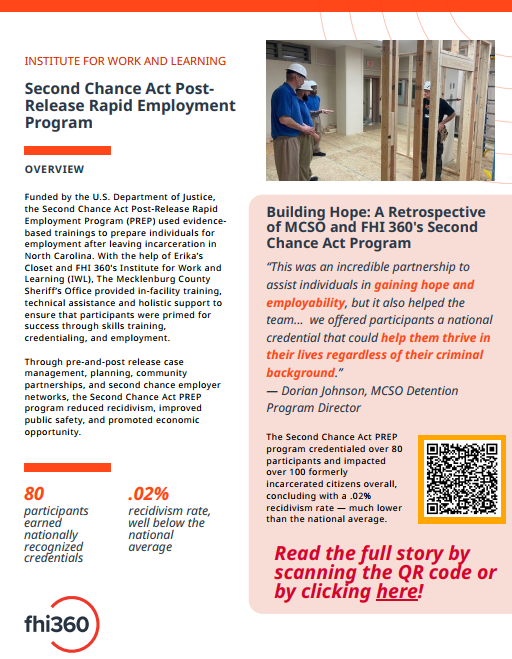
Funded by the U.S. Department of Justice, the Second Chance Act Post-Release Rapid Employment Program (PREP) used evidence-based trainings to prepare individuals for employment after leaving incarceration in North Carolina through a partnership between FHI 360’s Institute for Work and Learning, Erika’s Closet, and the Mecklenburg County Sheriff’s Office.
Read the full fact sheet to learn more!
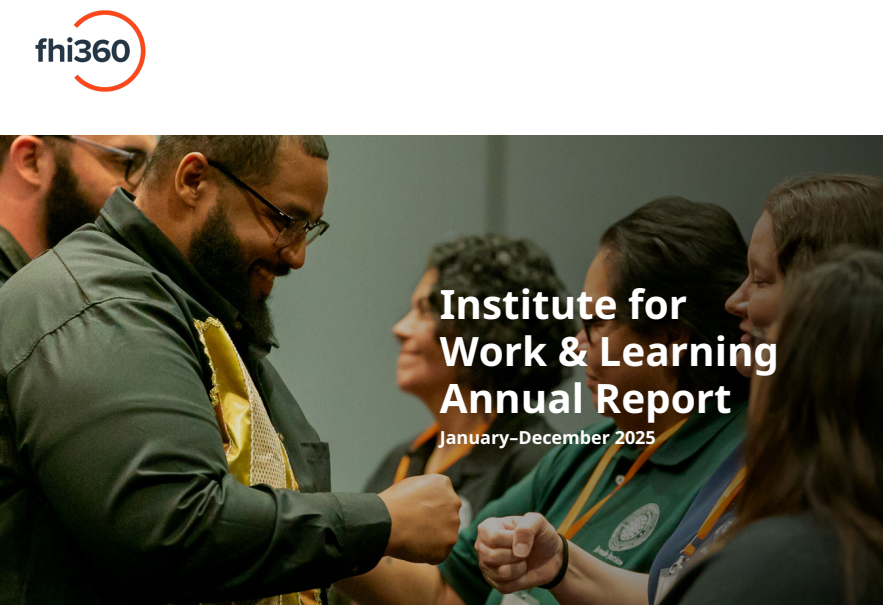
Our work in 2025 reflects our commitment to meeting people where they are and building systems that support long-term economic mobility. Whether developing registered apprenticeships, working with corporate partners to build career pathways, supporting individuals returning from incarceration, or helping families navigate career exploration and advancement, IWL focused on connecting learning to opportunity, and opportunity to stability.
Read IWL’s 2025 Annual Report to learn more about our commitment to strengthening workforce systems that work for individuals, families, and communities.
Substance Abuse Prevention Programming examines the inclusion of Indigenous knowledge, culture, and traditions in health interventions for Native youth. Culture-centric programs promote holistic healing, connection to community, and beneficial, lasting change.
Read the full report to learn more.
Art as Medicine: Art-Based Programming examines the benefits of art as an avenue for emotional expression and healing for justice-involved youth. Art-based programs can help youth process emotions, manage behavioral issues, and develop healthier responses to stress, in addition to building their interpersonal, problem-solving, and emotional regulation skills.
Read the full report to learn more.
Mentoring and peer programs rooted in cultural values are proving to be powerful tools for supporting American Indian and Alaska Native youth. These initiatives, ranging from drumming-based mentoring and equine therapy to youth-led courts and peer recovery support, build on trusted relationships and shared lived experience to foster resilience, reduce justice involvement, and promote mental wellness. This issue brief highlights promising, community-driven approaches that center Native voices and traditions, offering professionals practical insights into culturally responsive, strengths-based strategies that work.
Read the full report to learn more.
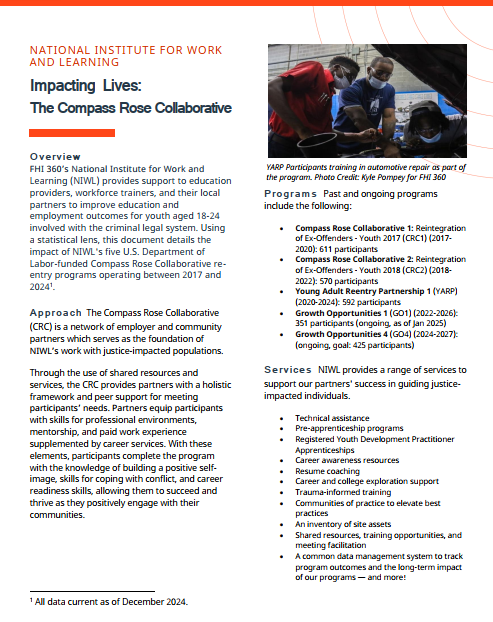
FHI 360’s Institute for Work and Learning (IWL) provides support to education providers, workforce trainers, and their local partners to improve education and employment outcomes for youth aged 18-24 involved with the criminal legal system. Using a statistical lens, this document details the impact of IWL’s five U.S. Department of Labor-funded Compass Rose Collaborative re-entry programs operating between 2017 and 2024.
Breaking Cycles of Adversity explores how school-based prevention strategies foster educational success, strengthen social connections, and reduce interactions with the justice system. Culturally relevant approaches that promote positive decision-making can support healthy relationships, strengthen identity, and improve mental and physical health, which are critical protective factors against justice system involvement.
Read the full report to learn more.
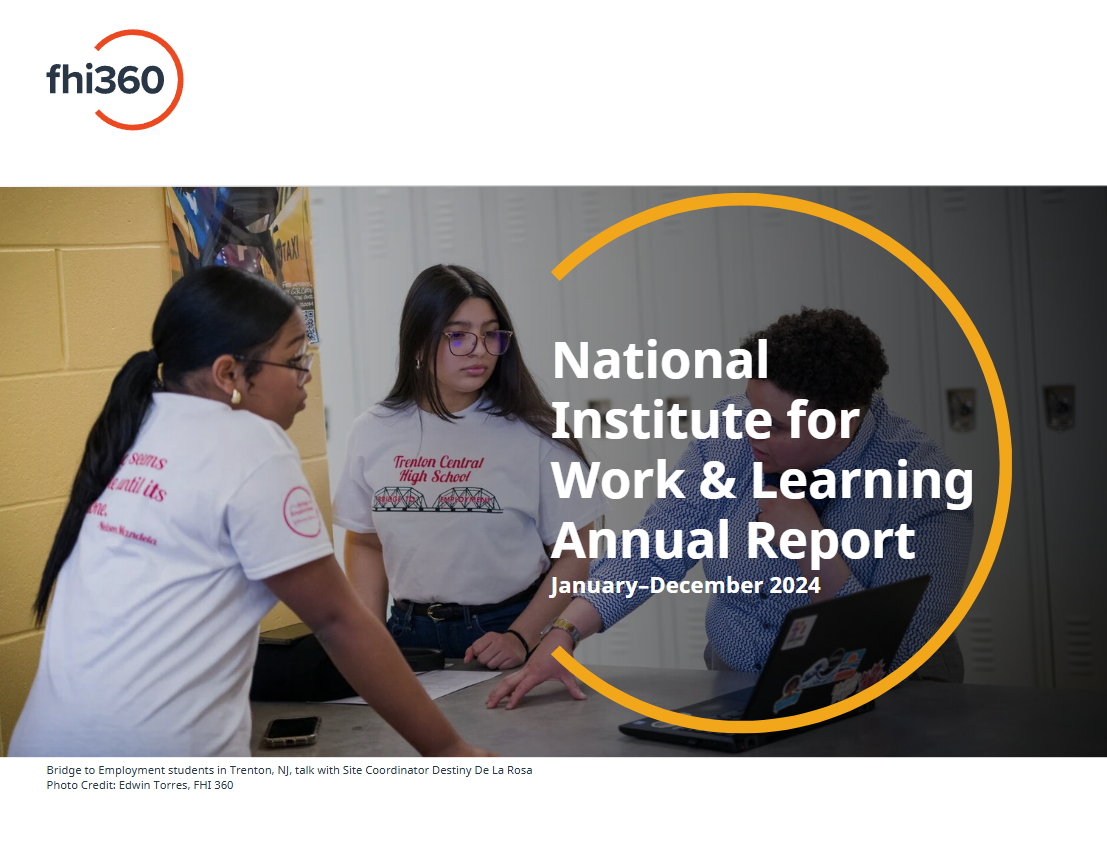
Our work in 2024 highlights our pivotal role in workforce development across the country. In fulfilling our mission to advance solutions in education and workforce systems, we establish partnerships, expand economic opportunities through work-based learning, foster employee engagement, and provide a comprehensive spectrum of services for learning and workforce development.
Read NIWL’s 2024 Annual Report to learn more about our work to strengthen our partners and forge connections so that we can all reach our fullest potential.
Just looking for the highlights? Check out our 2024 Infographic.