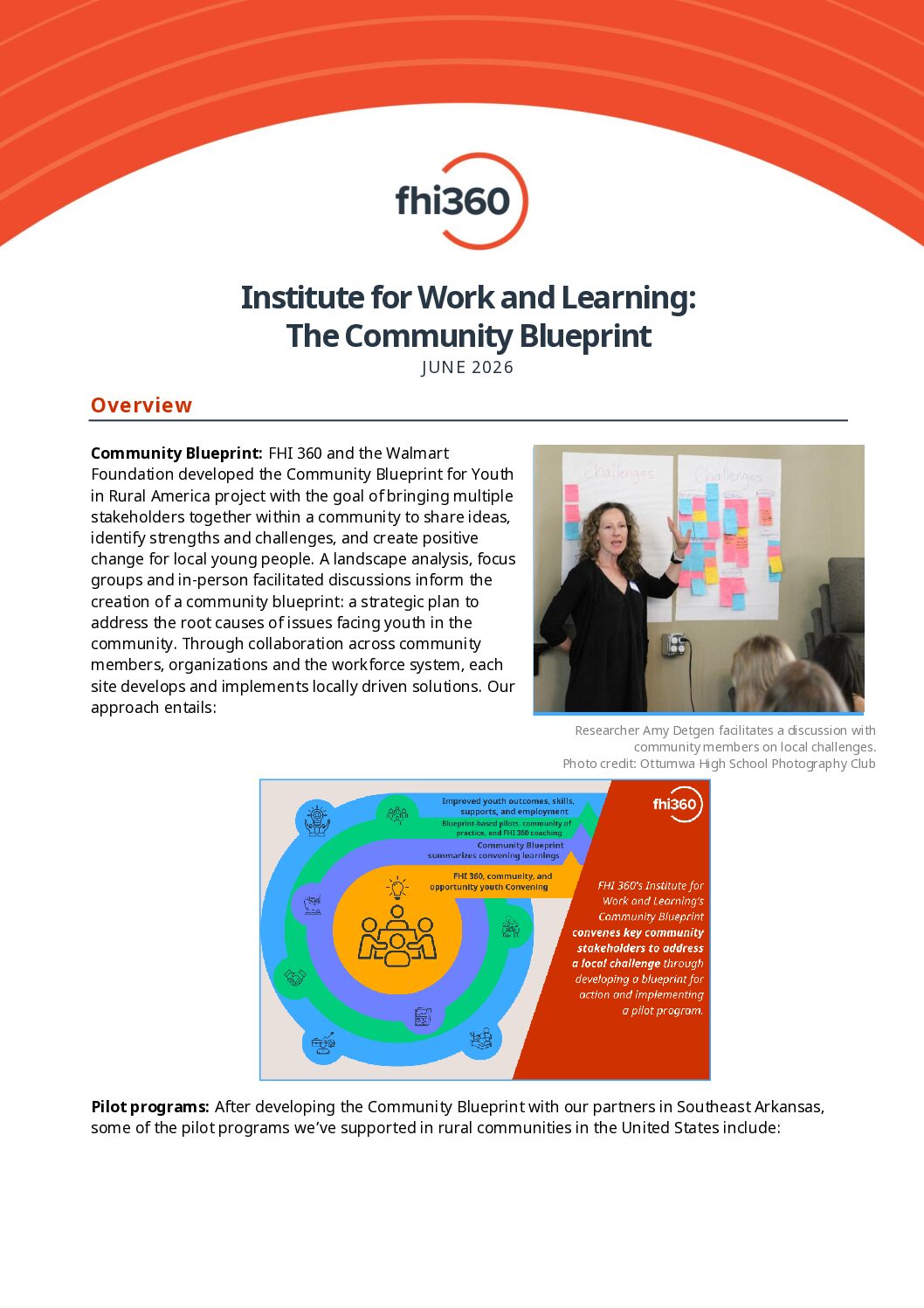
FHI 360 and the Walmart Foundation developed the Community Blueprint for Youth in Rural America project with the goal of bringing multiple stakeholders together within a community to share ideas, identify strengths and challenges, and create positive change for local young people.
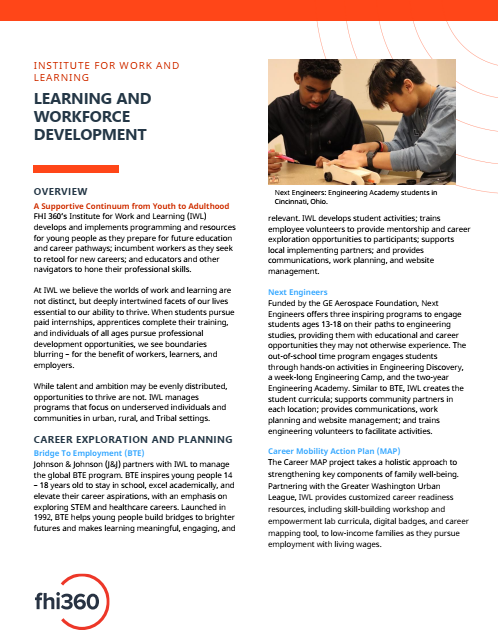
IWL’s programs serve youth and young adults in career exploration, workforce development, and education to career transitions – all to serve the greater workforce environment in a way that benefits workers, learners, and employers. Read the full overview to learn more.
This fact sheet is an overview of IWL’s Capabilities in STEM Learning. To foster the future workforce in Science, Technology, Engineering, and Mathematics, we develop curricula, engage employers and train employees, and build strong programs through research & evaluation.
Research highlights the benefits of collaborating with intermediary organizations for local reentry organizations and the justice-involved youth they serve. Read this resource for more information.
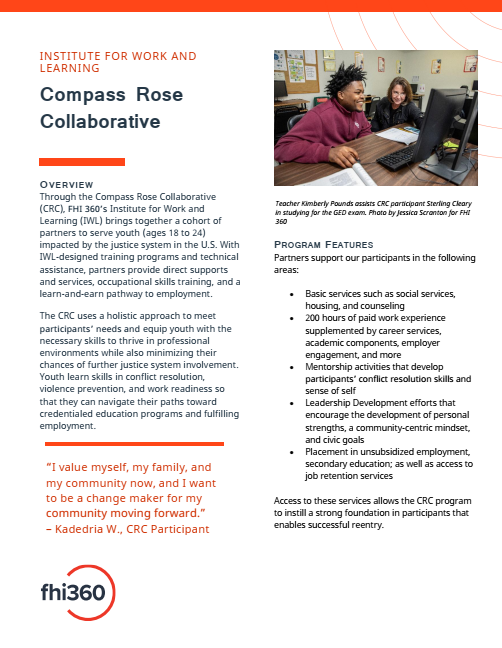
The Compass Rose Collaborative (CRC) brings together FHI 360 and a cohort of partners that will serve justice-impacted youth in a holistic way. Through IWL-designed training materials, a learn-and-earn working environment, and valuable mentorship activities, the CRC ensures that participants are equipped to thrive in their careers while minimizing further justice system involvement. Read this fact sheet to learn more.
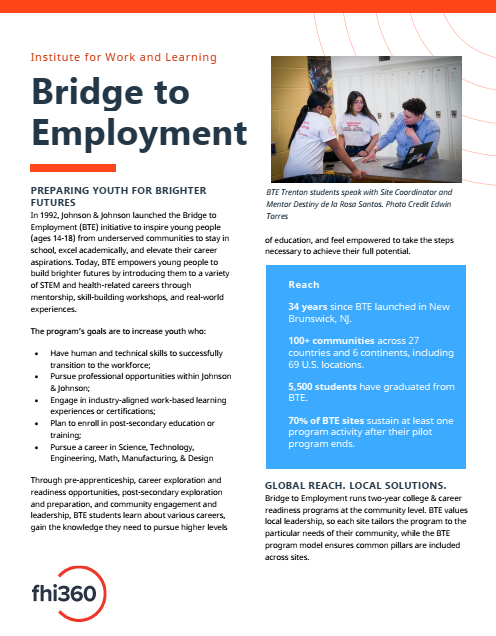
Launched by Johnson & Johnson in 1992, Bridge to Employment (BTE) inspires young people (14 to 18 years old) to stay in school, excel academically, and elevate their career aspirations. This fact sheet is an overview of the BTE initiative, IWL’s role, key data and evaluation results.
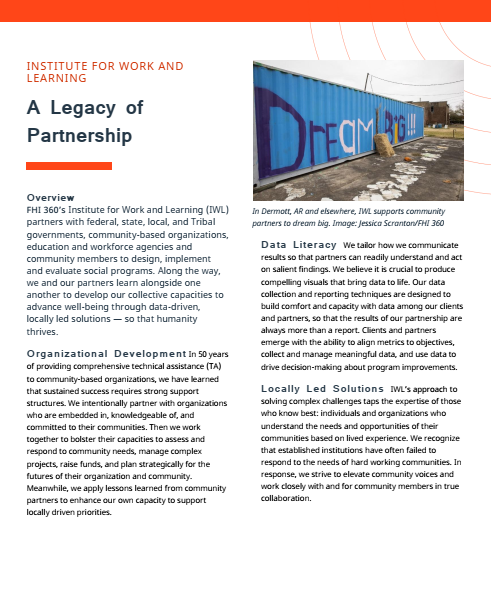
FHI 360’s Institute for Work and Learning (IWL) partners with federal, state, local, and Tribal governments, community-based organizations, education and workforce agencies and community members to design, implement and evaluate social programs. Along the way, we and our partners learn alongside one another to develop our collective capacities to advance well-being through data-driven, locally led solutions — so that humanity thrives.
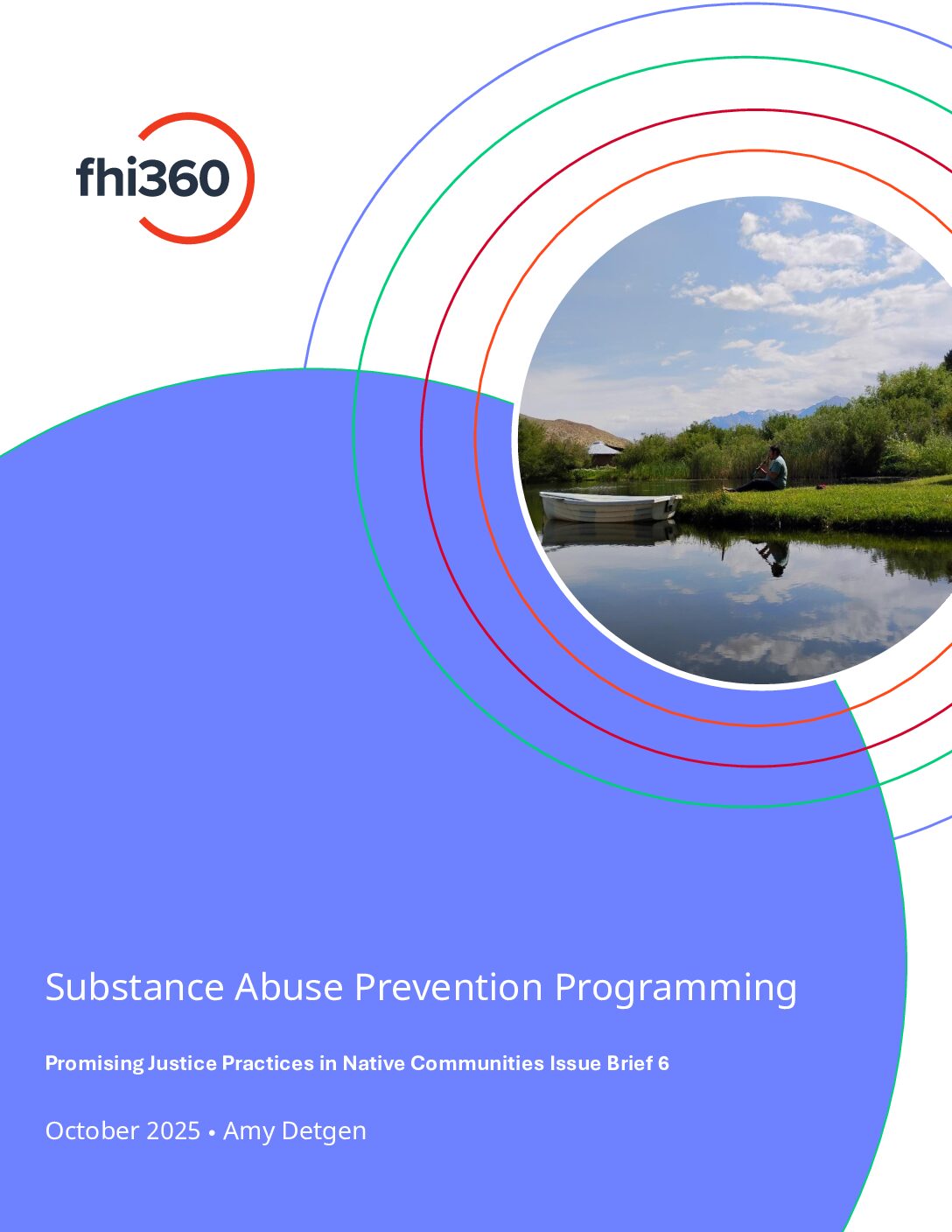
Substance Abuse Prevention Programming examines the inclusion of Indigenous knowledge, culture, and traditions in health interventions for Native youth. Culture-centric programs promote holistic healing, connection to community, and beneficial, lasting change.
Art as Medicine: Art-Based Programming examines the benefits of art as an avenue for emotional expression and healing for justice-involved youth. Art-based programs can help youth process emotions, manage behavioral issues, and develop healthier responses to stress, in addition to building their interpersonal, problem-solving, and emotional regulation skills.
Mentoring and peer programs rooted in cultural values are proving to be powerful tools for supporting American Indian and Alaska Native youth. These initiatives, ranging from drumming-based mentoring and equine therapy to youth-led courts and peer recovery support, build on trusted relationships and shared lived experience to foster resilience, reduce justice involvement, and promote mental wellness. This issue brief highlights promising, community-driven approaches that center Native voices and traditions, offering professionals practical insights into culturally responsive, strengths-based strategies that work.