
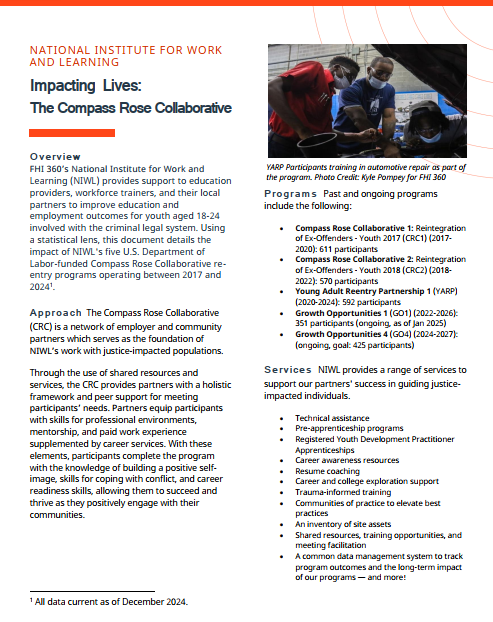
FHI 360’s Institute for Work and Learning (IWL) provides support to education providers, workforce trainers, and their local partners to improve education and employment outcomes for youth aged 18-24 involved with the criminal legal system. Using a statistical lens, this document details the impact of IWL’s five U.S. Department of Labor-funded Compass Rose Collaborative re-entry programs operating between 2017 and 2024.
Type: Article | Case Study | Overview | Story
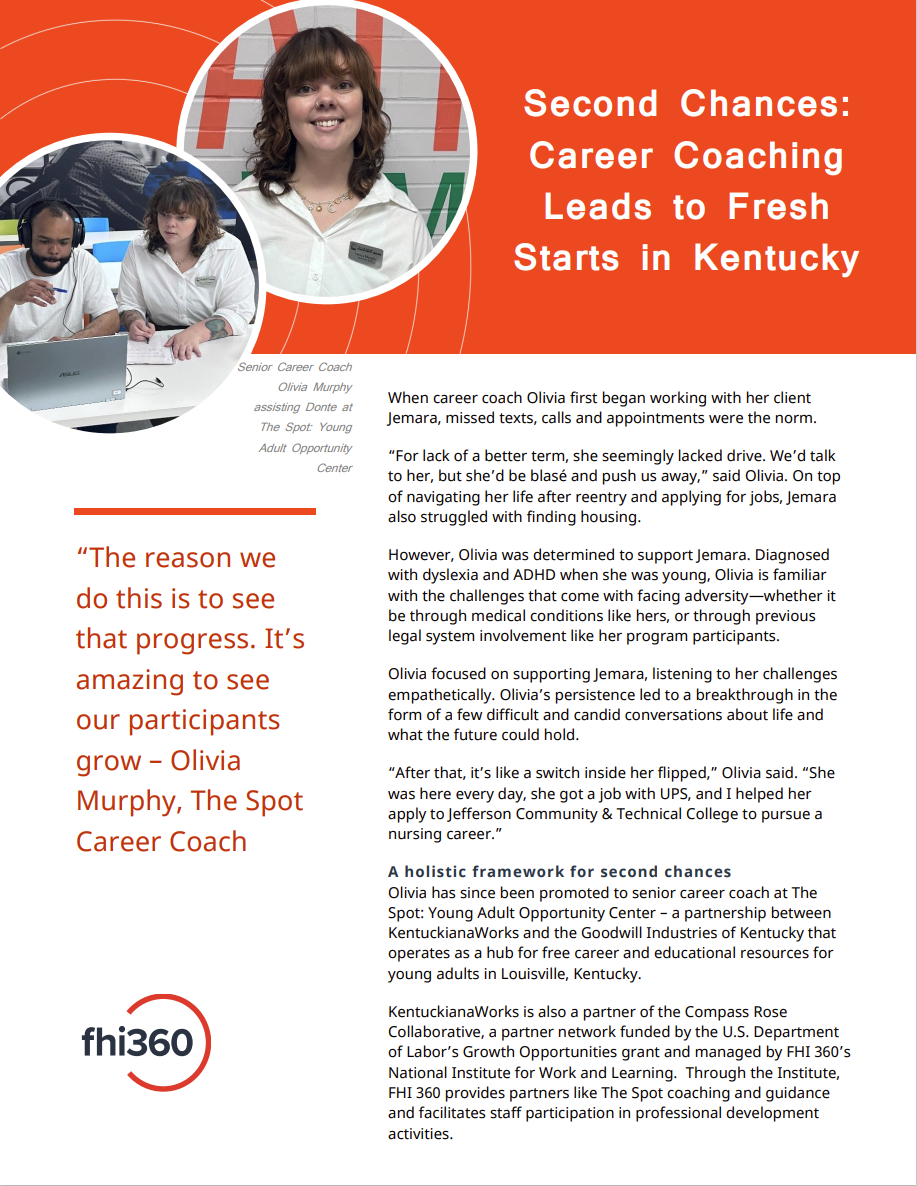
For Second Chance month, we spoke to Olivia Murphy, who serves as senior career coach (and now youth program manager) for The Spot: Young Adult Opportunity Center in Louisville, KY. The story highlights how KentuckianaWorks navigates the challenges of life after incarceration, and how their impact encourages people to embrace second chances.
Read the full story to learn more.
Breaking Cycles of Adversity explores how school-based prevention strategies foster educational success, strengthen social connections, and reduce interactions with the justice system. Culturally relevant approaches that promote positive decision-making can support healthy relationships, strengthen identity, and improve mental and physical health, which are critical protective factors against justice system involvement.
Read the full report to learn more.
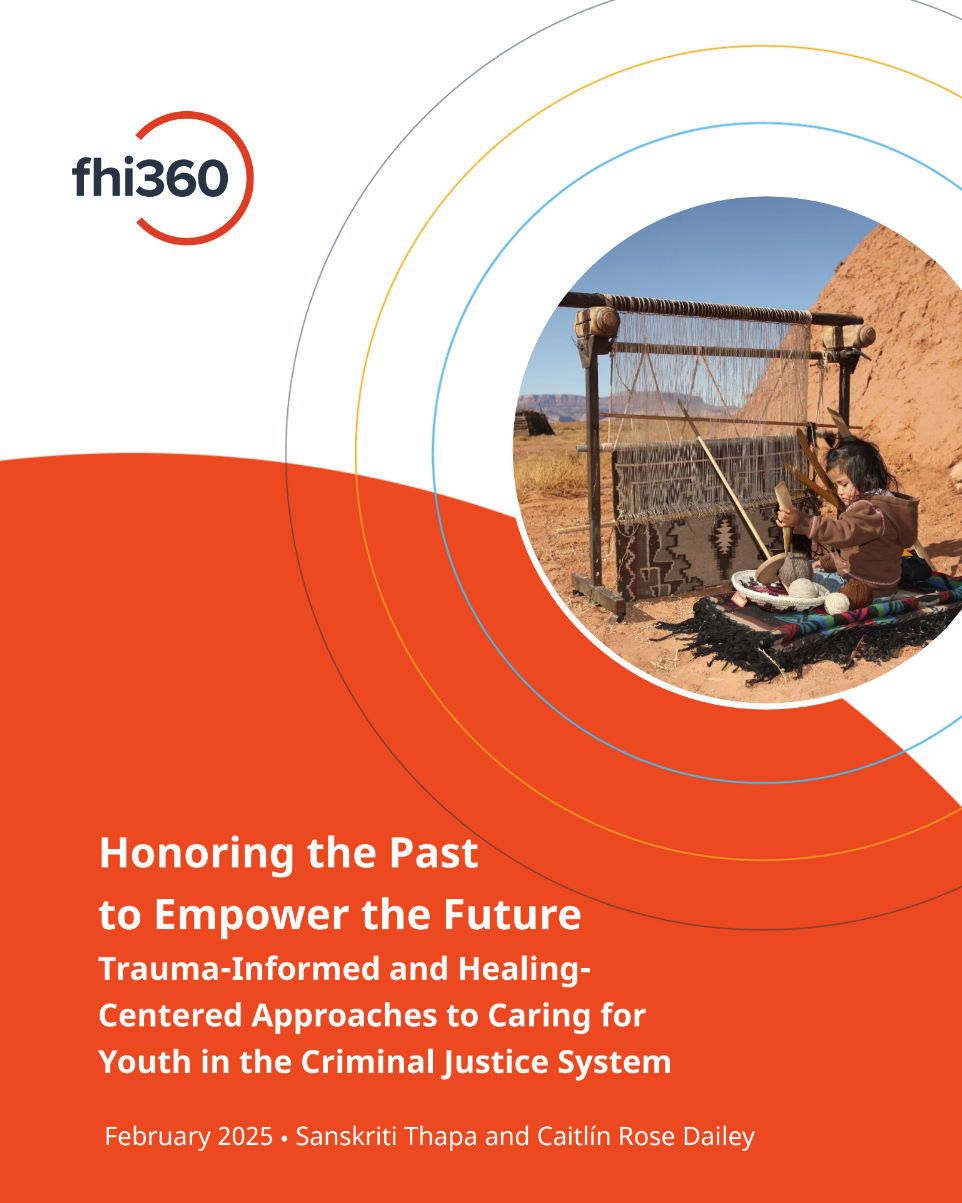
Honoring the Past to Empower the Future reviews the landscape of holistic and inclusive approaches to trauma-informed and healing-centered care for youth as implemented by tribal governments and organizations. Approaches that incorporate medicinal practices and cultural values, focus on the healing power of empathy, draw on the wisdom of elders and spiritual leaders, and embrace the rehabilitative potential of community engagement help to promote an environment of healing, recovery, and growth. Read the article to learn more.
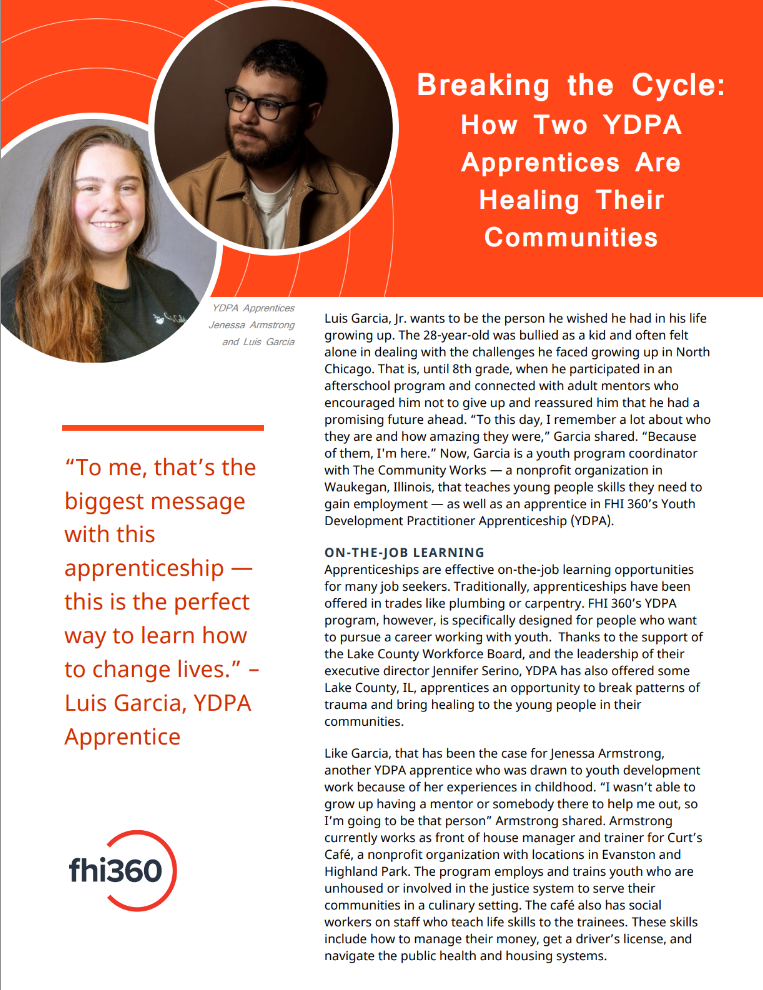
“To me, that’s the biggest message with this apprenticeship — this is the perfect way to learn how to change lives.”
As we celebrate National Apprenticeship Week 2024, we highlight two Lake County Youth Development Practitioner Apprentices who use their work to break the cycles of trauma and heal their communities: Luis Garcia Jr. and Jenessa Armstrong. Click here to read about their journeys in becoming the person they wanted to have in their corner growing up.
Tribal Healing to Wellness Courts have emerged as a promising community-based, culturally competent solution to disproportionate Native incarceration in the United States, drawing on the community to appropriately address the needs of justice-involved Native Americans. This review examines the disparities in Native incarceration in federal and state systems, as well as how these disparities can be addressed, including the role of Tribal Healing to Wellness Courts in effectively improving outcomes for participants.
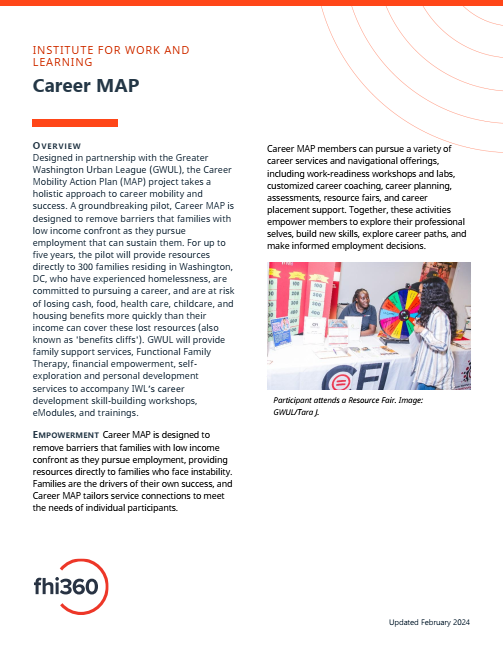
Designed in partnership with the Greater Washington Urban League (GWUL), the Career Mobility Action Plan (MAP) project takes a holistic approach to career mobility and success. A groundbreaking pilot, Career MAP is designed to remove barriers that families with low income confront as they pursue employment that can sustain them.
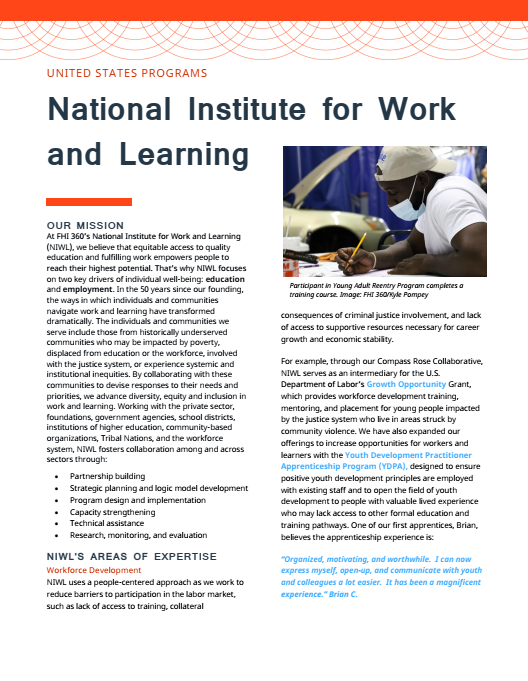
This fact sheet profiles the work of FHI 360’s National Institute for Work and Learning (NIWL), which focuses on two key drivers of individual well-being: education and employment.
The National Institute for Work and Learning (NIWL) at FHI 360 conducts high-quality research and evaluation to inform policies, practices and program models in education, employment, social services, and community systems. Our expertise is cross-sectoral and interdisciplinary. Our approach combines methodological rigor with deep content knowledge and a commitment to collaboration.
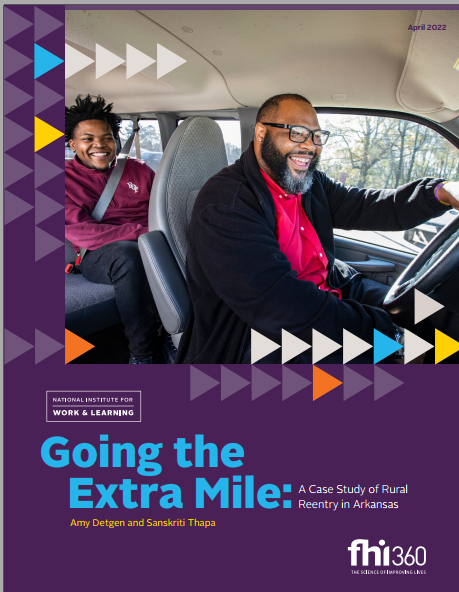
Going the extra mile: A case study of rural reentry in Arkansas provides an exploration of a rural community in southeast Arkansas that takes a unique, individualized approach to reentering young adults ages 18-24. The received wisdom on rural reentry is that it is generally more difficult than reentry in an urban setting. Phoenix Youth and Family Services, which serves a rural part of Arkansas, has excelled on key outcomes as part of FHI 360’s Compass Rose Collaborative (CRC)1, a project funded by the U.S. Department of Labor to improve the education and employment outcomes of young adults,
ages 18 through 24, after involvement in the U.S. criminal justice system.
Phoenix Youth and Family Services provides wraparound support services to its participants to help juveniles, young adults, and families secure a safe, healthy, and strong life